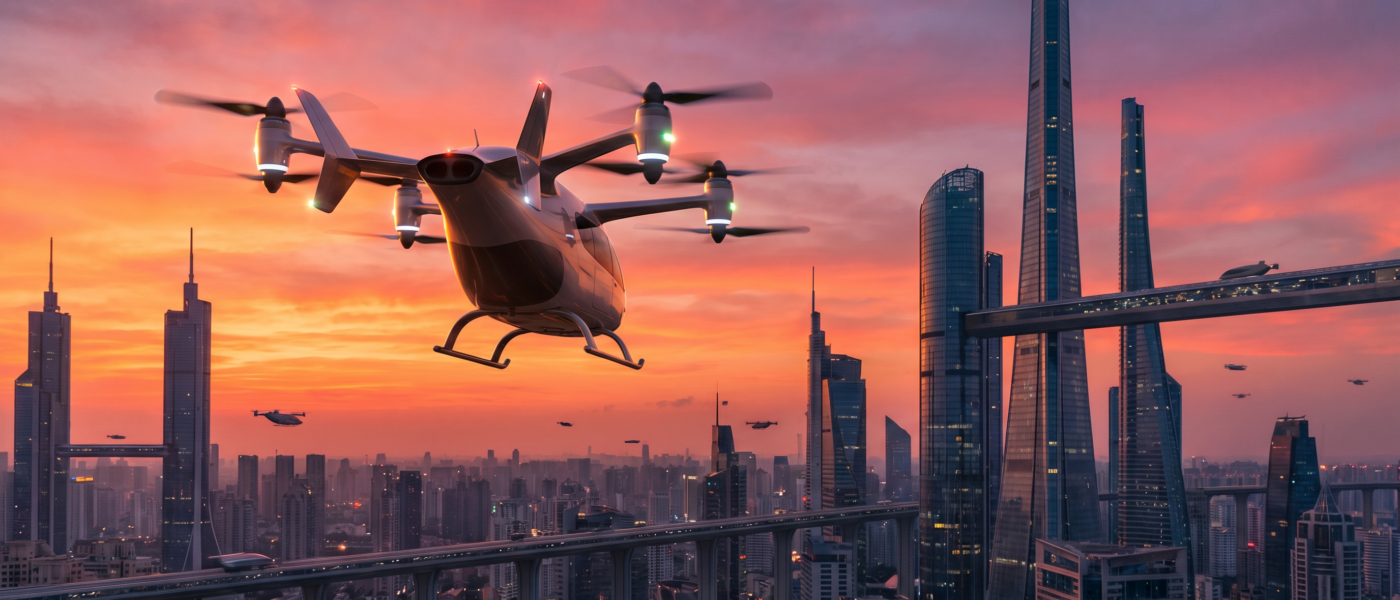
The dream of soaring above gridlocked traffic is finally becoming a reality. As we approach 2025, the landscape of daily commuting is undergoing a massive shift. Innovative technology is turning science fiction into a practical solution for modern travelers.
This evolution centers on the concept of urban air mobility. By utilizing the space above our city streets, engineers are creating efficient ways to bypass traditional road congestion. These advancements promise to save time and reduce the stress of long commutes.
We are witnessing the rise of sophisticated flying cars designed for short-distance travel. These aerial vehicles represent a bold leap forward in engineering and design. It is an exciting time to explore how these machines will reshape our world and change the way we move through our cities.
Key Takeaways
- Urban air mobility is set to transform how we navigate crowded metropolitan areas.
- New technology is making personal flight a safer and more accessible option.
- Commuters can expect significant time savings by utilizing vertical takeoff capabilities.
- The industry is focusing on sustainable energy sources to power these innovative machines.
- Infrastructure development is the next major hurdle for widespread adoption in the United States.
The Dawn of the Urban Air Mobility Era
With the advent of eVTOL aircraft, the concept of urban air mobility is transforming into a tangible reality. Urban air mobility is no longer a futuristic idea but a rapidly evolving sector that promises to revolutionize the way we travel within cities.
The increasing congestion in urban areas has led to a growing need for sustainable transport solutions. eVTOL technology is at the forefront of this change, offering a cleaner, quieter, and more efficient alternative to traditional modes of transportation.
One of the key benefits of urban air mobility is its potential to reduce travel times significantly. By taking to the skies, commuters can avoid the gridlock that often characterizes urban road networks. Moreover, eVTOL aircraft are designed to be environmentally friendly, producing zero emissions and minimizing noise pollution.
The table below highlights some of the key features of eVTOL aircraft and their implications for urban air mobility:
| Feature | Description | Benefit |
|---|---|---|
| Electric Propulsion | Uses electric motors for propulsion | Zero emissions, reduced noise |
| Vertical Take-Off and Landing | Ability to take off and land vertically | Increased flexibility, reduced infrastructure needs |
| Autonomous Navigation | Utilizes AI for navigation and control | Enhanced safety, reduced pilot workload |
As urban air mobility continues to evolve, it is expected to have a profound impact on urban planning and development. Cities may need to adapt by establishing vertiports and integrating aerial traffic management systems into their infrastructure.
The dawn of the urban air mobility era is an exciting development that holds much promise for the future of transportation. As technology continues to advance and regulatory frameworks evolve, we can expect to see significant growth in this sector.
Understanding the Technology Behind Flying Cars Aerial Vehicles 2025
Understanding the technology behind flying cars is crucial to appreciating their potential impact on future transportation. The innovation in aerial vehicles is driven by advancements in several key areas.
Electric Vertical Take-Off and Landing Systems
Electric vertical take-off and landing (eVTOL) systems are at the heart of flying cars. These systems enable aircraft to take off and land vertically, eliminating the need for runways. Electric propulsion is a critical component, offering a quieter, more efficient, and environmentally friendly alternative to traditional fossil-fuel-based propulsion systems. eVTOL aircraft are designed to be highly maneuverable, making them ideal for urban environments where space is limited.
The benefits of eVTOL technology include reduced noise pollution and lower operational costs. Companies are investing heavily in developing these systems, with several prototypes already undergoing testing.
Autonomous Navigation and AI Integration
Another vital technology driving the development of flying cars is autonomous navigation coupled with AI integration. Autonomous systems enable flying cars to navigate through complex urban landscapes without human intervention, enhancing safety and reducing the risk of accidents. AI algorithms process vast amounts of data from various sensors, allowing the vehicles to make informed decisions in real-time.
The integration of AI also facilitates predictive maintenance, route optimization, and adaptive learning, making the aerial transportation system more efficient and reliable.
Joby Aviation S4: Leading the Commercial Air Taxi Market
Joby Aviation’s S4 is revolutionizing urban air mobility with its cutting-edge design and technology. As one of the pioneers in the commercial air taxi market, the S4 is setting new standards for efficiency, safety, and passenger experience.
Design Specifications and Passenger Capacity
The Joby Aviation S4 boasts an innovative design that prioritizes both form and function. With a capacity for four passengers, it is designed to provide a comfortable and quiet ride, utilizing electric vertical take-off and landing (eVTOL) technology.
| Specification | Detail |
|---|---|
| Passenger Capacity | 4 |
| Propulsion Type | Electric Vertical Take-Off and Landing (eVTOL) |
| Cruise Speed | 200 mph |
| Range | 150 miles |
According to JoeBen Bevirt, CEO of Joby Aviation,
“Our goal is to transform the way people move, making it cleaner, quieter, and more efficient.”
Safety Protocols and Certification Progress
Safety is paramount for the Joby Aviation S4. The aircraft is equipped with multiple redundancies and advanced safety features to ensure a secure travel experience. Joby Aviation is working closely with regulatory bodies to achieve certification, with significant progress already made.
- Multiple redundancy in critical systems
- Advanced battery technology
- Regular software updates for continuous improvement
The certification process involves rigorous testing, including flight tests and simulation-based assessments. Joby Aviation is committed to meeting the highest safety standards set by regulatory authorities.
Archer Midnight: Redefining Short-Distance Commuting
Archer Midnight is at the forefront of redefining short-distance commuting, offering a faster, cleaner, and quieter alternative to traditional modes of transport. As cities around the world grapple with congestion and pollution, the need for innovative transportation solutions has never been more pressing.
The Archer Midnight, with its cutting-edge design and technology, is poised to address these challenges head-on. By providing a reliable, efficient, and environmentally friendly mode of transport, it has the potential to significantly reduce travel times and improve the quality of life for urban dwellers.
Performance Metrics and Range Capabilities
The Archer Midnight boasts impressive performance metrics, making it an attractive option for short-distance commuting. Some of its key specifications include:
| Specification | Value |
|---|---|
| Range | Up to 60 miles |
| Cruise Speed | 150 mph |
| Payload Capacity | Up to 4 passengers |
These specifications make the Archer Midnight ideally suited for urban environments, where the ability to travel quickly and efficiently is paramount. Its range and speed ensure that it can cover significant distances without the need for frequent recharging, making it a practical solution for daily commutes.
Noise Reduction Technology for Urban Environments
One of the significant challenges facing urban air mobility is noise pollution. The Archer Midnight addresses this issue with its advanced noise reduction technology, designed to minimize its acoustic footprint. This technology is crucial for gaining public acceptance and ensuring that the benefits of aerial transportation are not outweighed by the drawbacks.
By incorporating state-of-the-art quiet flight capabilities, the Archer Midnight is able to operate in noise-sensitive environments without causing significant disturbance. This feature is particularly important in densely populated urban areas, where noise levels are already a concern.
Alef Aeronautics Model A: The First Real Flying Car
Imagine a car that can seamlessly transition from a road vehicle to an aircraft; Alef Aeronautics’ Model A makes this a reality. This innovative vehicle is poised to revolutionize the way we travel, offering a glimpse into a future where commuting is not limited by traditional road infrastructure.
Dual-Mode Functionality for Road and Sky
The Alef Aeronautics Model A boasts an impressive dual-mode design, allowing it to operate both on roads and in the sky. This functionality is made possible through a sophisticated engineering process that ensures a smooth transition between driving and flying modes.
Some key features of the Model A’s dual-mode functionality include:
- Vertical Takeoff and Landing (VTOL): The Model A can take off and land vertically, eliminating the need for runways.
- Electric Propulsion: The use of electric propulsion systems not only reduces environmental impact but also minimizes noise pollution.
- Advanced Navigation: The integration of advanced navigation systems enables the vehicle to plot the most efficient course, whether on the road or in the air.
Regulatory Hurdles and Street-Legal Status
Despite its innovative design, the Alef Aeronautics Model A faces significant regulatory hurdles before it can be deemed street-legal. Achieving certification involves complying with both automotive and aviation regulations, a complex and challenging process.
The main regulatory challenges include:
- Compliance with FAA Regulations: The Model A must meet the Federal Aviation Administration’s (FAA) stringent safety and performance standards.
- Adherence to Automotive Standards: Simultaneously, it must comply with the safety and emissions standards set by automotive regulatory bodies.
- Public Acceptance and Safety Concerns: Addressing public concerns regarding safety, noise, and privacy is crucial for the successful integration of flying cars into urban environments.
Lilium Jet: Revolutionizing Regional Air Travel
Regional air travel is on the cusp of a transformation, thanks to the innovative Lilium Jet. This electric vertical take-off and landing (eVTOL) aircraft is designed to provide efficient and sustainable regional air travel, connecting cities and communities like never before.
The Lilium Jet’s innovative design and technology make it an attractive option for regional air travel. One of its standout features is its unique ducted fan propulsion system, which provides a quieter and more efficient flight experience.
Ducted Fan Propulsion System
The ducted fan propulsion system is a key component of the Lilium Jet’s design. This system uses electric ducted fans to generate lift and propulsion, offering several advantages over traditional propulsion systems. The ducted fans are not only more efficient but also significantly quieter, making the Lilium Jet suitable for urban environments.
According to Daniel Wiegand, CEO and co-founder of Lilium, “Our ducted fan propulsion system is a game-changer for regional air travel, offering a unique blend of efficiency, safety, and comfort.”
“The Lilium Jet’s propulsion system is designed to provide a smooth and quiet ride, making it ideal for short-distance flights between cities.”
Expanding Connectivity Between Major Cities
The Lilium Jet is designed to expand connectivity between major cities, reducing travel times and enhancing regional economic development. With its ability to take off and land vertically, the Lilium Jet can operate from vertiports located in urban centers, minimizing the need for large runways.
| City Pair | Current Travel Time (by car) | Lilium Jet Travel Time |
|---|---|---|
| New York – Boston | 4 hours | 1 hour |
| Los Angeles – San Francisco | 6 hours | 1.5 hours |
| Chicago – Detroit | 5 hours | 1.2 hours |
By significantly reducing travel times between cities, the Lilium Jet is poised to revolutionize regional air travel, making it faster, more efficient, and more sustainable.
EHang 216-S: Autonomous Passenger Drones in Action
In the realm of futuristic transportation, the EHang 216-S stands out as a pioneering autonomous passenger drone. This section delves into its operational reliability and the significant milestones achieved in global deployment and testing.
Pilotless Flight Operations and Reliability
The EHang 216-S operates without a pilot on board, relying on sophisticated autonomous technology to navigate through urban skies. This pilotless flight capability is made possible by advanced AI algorithms and real-time data processing.
One of the key features of the EHang 216-S is its redundancy in critical systems, ensuring that the drone remains operational even in the event of component failure. This redundancy, combined with rigorous testing protocols, enhances the overall reliability of the drone.
Global Deployment and Testing Milestones
The EHang 216-S has seen significant deployment and testing across various countries, marking crucial milestones in its development. Cities around the world are evaluating its potential for integrating into their urban air mobility plans.
Some of the notable testing milestones include successful passenger flights in diverse environments, demonstrating the drone’s adaptability and performance under different conditions.
| Specification | Description | Value |
|---|---|---|
| Maximum Speed | The highest speed the EHang 216-S can achieve. | 130 km/h |
| Flight Duration | The maximum duration the drone can fly on a single charge. | Up to 30 minutes |
| Passenger Capacity | The number of passengers the drone can carry. | 2 passengers |
| Testing Locations | Cities where the EHang 216-S has undergone testing. | Multiple cities worldwide |
Infrastructure Requirements for a Sky-Bound Future
With aerial transportation on the rise, cities are poised to undergo a significant shift in their infrastructural landscape. The proliferation of flying cars and drones necessitates the development of new infrastructure to support their operation, safety, and efficiency.
The introduction of aerial vehicles into urban environments is not just about the vehicles themselves, but also about creating an ecosystem that supports their functionality. This includes the development of vertiports, which are essentially helipads designed for vertical takeoff and landing (VTOL) aircraft.
The Rise of Vertiports in Metropolitan Areas
Vertiports are critical infrastructure for the successful integration of aerial vehicles into urban air mobility. These vertiports will serve as hubs for takeoff, landing, and maintenance, providing the necessary facilities for passengers and cargo. Major cities are already planning and constructing vertiports to accommodate the anticipated demand for aerial transportation services.
The design and location of vertiports will be crucial in determining their efficiency and acceptance. Factors such as noise reduction, safety protocols, and accessibility will influence their development. For instance, vertiports might be built on rooftops or integrated into existing transportation hubs to minimize their footprint and enhance connectivity.
Integrating Aerial Traffic Management Systems
As the number of aerial vehicles increases, so does the complexity of managing air traffic. Aerial Traffic Management (ATM) systems are being developed to ensure safe distances between aircraft, manage traffic flow, and prevent collisions. These systems will be integral to the safe operation of aerial vehicles in urban environments.
The integration of ATM systems will require significant advancements in technology, including real-time data analytics, AI-driven decision-making, and seamless communication between aircraft and ground control. Collaboration between aviation authorities, technology providers, and urban planners will be essential to develop and implement these systems effectively.
In conclusion, the infrastructure required for a sky-bound future is multifaceted, involving not just the physical structures like vertiports but also sophisticated management systems. As cities move towards embracing aerial transportation, the development of these infrastructures will play a pivotal role in determining the success and safety of urban air mobility.
Economic and Environmental Impacts of Aerial Transportation
The advent of aerial transportation is poised to revolutionize the way we travel, bringing with it significant economic and environmental implications. As cities around the world grapple with congestion and pollution, flying cars and aerial vehicles offer a promising solution. However, their introduction also raises important questions about their overall impact on the economy and the environment.
Reducing Carbon Footprints with Electric Propulsion
One of the most significant environmental benefits of the new generation of aerial vehicles is their use of electric propulsion. Unlike traditional fossil-fuel-based aircraft, electric aerial vehicles produce zero emissions during operation, significantly reducing their carbon footprint. For instance, companies like Joby Aviation and Lilium are pioneering electric vertical take-off and landing (eVTOL) aircraft, which are expected to decrease greenhouse gas emissions in urban areas.
- Joby Aviation’s eVTOL aircraft is projected to reduce carbon emissions by up to 90% compared to traditional helicopters.
- Lilium’s Jet is designed to be fully electric, with a propulsion system that minimizes noise pollution as well.
Cost Projections for Future Commuters
The economic impact of aerial transportation will largely be felt through its effect on commuting costs. While initial prices for aerial taxi services are expected to be high, economies of scale and competition are likely to drive prices down over time. Here are some key cost factors to consider:
- Operating Costs: Electric propulsion reduces fuel costs, and simpler vehicle designs could lower maintenance expenses.
- Initial Investment: The cost of developing vertiports and aerial traffic management systems will be substantial but is expected to be offset by long-term savings and revenue generation.
As the industry matures, commuters can expect more affordable options, making aerial transportation a viable alternative to traditional modes of transport.
| Company | Model | Projected Cost per Trip |
|---|---|---|
| Joby Aviation | S4 | $50-$75 |
| Lilium | Lilium Jet | $60-$90 |
| Archer Aviation | Midnight | $40-$70 |
In conclusion, the economic and environmental impacts of aerial transportation are multifaceted. While there are challenges to be addressed, the benefits of reduced carbon footprints and potentially lower commuting costs make it an exciting development in the transportation sector.
Navigating the Regulatory Landscape and Public Safety
With the advent of flying cars and air taxis, regulatory bodies face the challenge of balancing innovation with public safety. The integration of aerial vehicles into urban airspace is a complex issue that requires careful consideration of various factors, including regulatory frameworks, airspace management, and public concerns.
FAA Guidelines and Airspace Management
The Federal Aviation Administration (FAA) plays a crucial role in shaping the regulatory landscape for aerial transportation. To ensure safe operations, the FAA has established guidelines for the certification of aerial vehicles, including requirements for electric vertical take-off and landing (eVTOL) aircraft. Airspace management is another critical aspect, as it involves the coordination of aerial traffic to prevent collisions and minimize disruptions.
Key aspects of FAA guidelines include:
- Certification standards for eVTOL aircraft
- Airworthiness directives for aerial vehicles
- Regulations for pilot training and licensure
Effective airspace management involves the use of advanced technologies, such as air traffic control systems and unmanned aircraft system traffic management (UTM) solutions. These systems enable the efficient routing of aerial traffic, reducing the risk of conflicts and enhancing overall safety.
Addressing Public Concerns Regarding Noise and Privacy
As aerial vehicles become more prevalent, addressing public concerns regarding noise and privacy is essential. Noise reduction technologies, such as ducted fan propulsion systems, are being developed to minimize the disturbance caused by aerial vehicles. Additionally, measures to protect passenger privacy, including data encryption and secure communication protocols, are being implemented.
A notable example of addressing public concerns is the Lilium Jet, which features a unique ducted fan propulsion system designed to reduce noise. As Lilium’s CEO, Klaus Roewe, noted, “We are committed to making regional air travel more accessible and sustainable, while also ensuring that our operations are environmentally friendly and respectful of local communities.”
“The future of urban air mobility depends on our ability to balance technological innovation with the needs and concerns of the public.”
By prioritizing public safety, regulatory compliance, and environmental sustainability, the aerial transportation industry can build trust with the public and create a more efficient, enjoyable travel experience.
Conclusion
As we look to the future of transportation, it’s clear that aerial vehicles are poised to revolutionize the way we travel. With companies like Joby Aviation, Archer, and Lilium leading the charge, the urban air mobility era is taking shape.
The development of electric vertical take-off and landing (eVTOL) systems, autonomous navigation, and AI integration is driving innovation in the industry. As infrastructure requirements, such as vertiports, begin to take shape, the potential for aerial vehicles to transform short-distance commuting and regional air travel becomes increasingly tangible.
The future of transportation is not just about new vehicles; it’s about creating a safer, more efficient, and environmentally friendly transportation system. With the regulatory landscape evolving to accommodate these new technologies, the stage is set for a significant shift in how we move people and goods.
As we move forward, the possibilities for aerial vehicles are vast, and their impact on the future of transportation will be significant. The integration of aerial vehicles into our transportation networks will redefine the way we live, work, and travel.