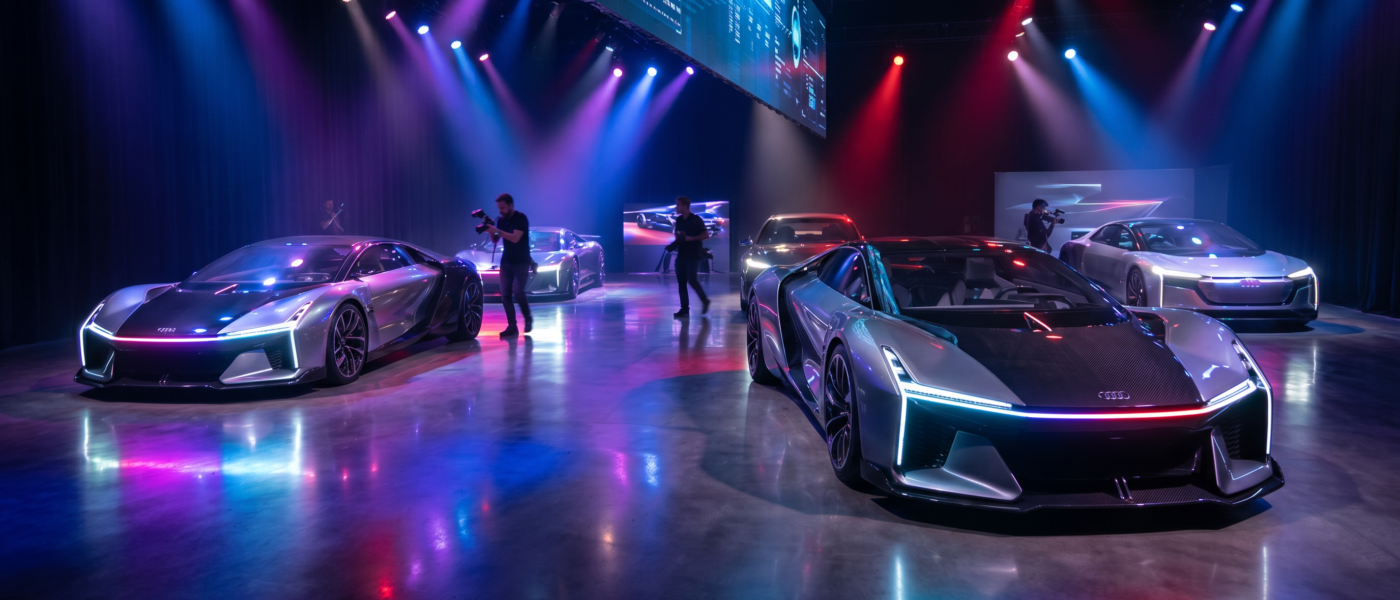
The automotive industry is currently standing on the edge of a massive transformation. We are witnessing a rapid shift toward smarter, cleaner, and more efficient transportation options that change how we travel every day.
Staying informed about these changes is essential for any modern driver. Our latest futuristic car news reviews 2025 guide helps you navigate this complex landscape with ease. We break down the most anticipated models hitting the streets soon.
The rise of electric vehicles 2025 marks a significant milestone in engineering. These machines offer incredible performance while reducing our carbon footprint. Whether you prioritize speed, luxury, or sustainability, this year promises something truly special for everyone.
Key Takeaways
- The automotive sector is undergoing a major technological revolution.
- New models focus heavily on sustainable energy and battery efficiency.
- Autonomous driving features are becoming standard in high-end releases.
- Design aesthetics are shifting toward aerodynamic and minimalist styles.
- Consumers have more high-performance options than ever before.
The Evolution of Automotive Design in 2025
As we step into 2025, the world of automotive design is witnessing a significant transformation, driven by technological advancements and sustainability concerns. The latest concept cars have showcased sleek designs with advanced aerodynamics and sustainable materials, redefining the future of the automotive industry.
The evolution of automotive design in 2025 is characterized by a blend of innovative materials, aerodynamic improvements, and a focus on sustainability. Car manufacturers are now more than ever focused on creating vehicles that are not only visually appealing but also environmentally friendly.
Advanced aerodynamics play a crucial role in the design of modern vehicles. By reducing drag and enhancing airflow, car manufacturers can improve the overall efficiency and performance of their vehicles. For instance, the use of active grille shutters and air curtains has become more prevalent in recent designs.
The use of sustainable materials is another key trend in 2025. Manufacturers are increasingly turning to eco-friendly materials such as recycled plastics, natural fibers, and sustainable textiles to reduce the environmental impact of their vehicles. This shift not only benefits the environment but also enhances the overall aesthetic appeal of the cars.
| Concept Car | Aerodynamic Features | Sustainable Materials | Design Innovations |
|---|---|---|---|
| Tesla Model 2 | Active grille shutters, air curtains | Recycled plastics, sustainable textiles | Minimalist interior design, advanced LED lighting |
| Lucid Gravity | Underbody panels, drag reduction system | Natural fibers, eco-friendly paints | Spacious interior, panoramic glass roof |
| Porsche Mission X | Aerodynamic wings, adaptive spoilers | Carbon fiber, recycled aluminum | Retro-futuristic design, gull-wing doors |
The automotive design trends of 2025 are not just about aesthetics; they represent a significant shift towards a more sustainable and technologically advanced future. As car manufacturers continue to innovate and push the boundaries of what is possible, we can expect to see even more exciting developments in the years to come.
Comprehensive Futuristic Car News Reviews 2025
The year 2025 is shaping up to be a landmark year for car enthusiasts, with several manufacturers unveiling groundbreaking futuristic vehicles. The automotive industry is witnessing a significant shift towards sustainability, autonomy, and connectivity, with numerous models set to redefine the driving experience.
Some of the most anticipated futuristic cars of 2025 include models from top manufacturers that are pushing the boundaries of latest car technology. These vehicles are not only expected to impress with their design and performance but also with their innovative features such as advanced driver-assistance systems (ADAS), electric powertrains, and autonomous driving capabilities.
A key aspect of these futuristic cars is their focus on sustainability. Many are expected to be electric or hybrid, offering reduced emissions and improved efficiency. For instance, the emphasis on electric vehicles (EVs) is growing, with several manufacturers committing to electrify their lineups.
Here are some of the key features to look out for in the futuristic cars of 2025:
- Advanced autonomous driving capabilities
- Enhanced connectivity and infotainment systems
- Sustainable and eco-friendly designs
- Innovative battery technologies for improved range and efficiency
- Aerodynamic designs for better performance and reduced drag
As these futuristic cars hit the market, they are expected to have a significant impact on the automotive industry. They will not only change how we drive but also how we perceive transportation. With the integration of futuristic car reviews and feedback from early adopters, manufacturers will be able to refine their offerings, further enhancing the driving experience.
The reviews of these futuristic cars will be crucial in understanding their strengths and weaknesses. Early reviews suggest that these vehicles will offer unparalleled driving experiences, combining comfort, technology, and sustainability in ways previously unimaginable.
Tesla Model 2: The Affordable Autonomous Vision
Tesla is on the verge of revolutionizing the electric vehicle market with the upcoming Model 2, designed to make autonomous driving affordable for the masses.
Overview
The Tesla Model 2 represents a significant step forward in Tesla’s mission to accelerate the world’s transition to sustainable energy. With a focus on affordability and autonomous capabilities, this model is poised to disrupt the automotive industry.
Reports suggest that the Tesla Model 2 is being developed with a price point significantly lower than its predecessors, making it an attractive option for those looking to enter the electric vehicle market.
Pros
- Affordability: The Model 2 is expected to be priced competitively, making autonomous driving technology more accessible.
- Autonomous Features: Equipped with advanced Autopilot technology, the Model 2 is set to redefine the future of driving.
- Sustainability: As a fully electric vehicle, it aligns with Tesla’s commitment to reducing carbon emissions.
Cons
- Regulatory Challenges: The rollout of autonomous vehicles faces regulatory hurdles that could impact the Model 2’s release timeline.
- Technological Limitations: Despite advancements, autonomous driving technology still faces challenges related to safety and reliability.
Features
The Tesla Model 2 is anticipated to come with a range of innovative features, including:
- Enhanced Autopilot: An advanced version of Tesla’s Autopilot system, enabling more sophisticated autonomous driving capabilities.
- Over-the-Air Updates: The ability to receive software updates remotely, ensuring the vehicle stays up-to-date with the latest technology.
- Premium Interior: A spacious and technologically advanced interior designed to provide a superior driving experience.
“The future of transportation is not just about the vehicles themselves, but about the technology that enables them to be safer, more efficient, and more enjoyable.”
Lucid Gravity: Redefining the Electric SUV
The Lucid Gravity represents a new era in electric SUVs, boasting advanced technology and exceptional performance. As the automotive industry continues to shift towards electrification, Lucid Motors is at the forefront with its latest offering.
Overview
The Lucid Gravity is designed to revolutionize the electric SUV segment with its impressive range, spacious interior, and cutting-edge features. With a focus on performance, comfort, and technology, this vehicle is poised to set a new standard in the market.
Key Specifications: The Lucid Gravity is expected to have a range of over 400 miles on a single charge, making it an ideal choice for both daily commutes and long road trips. Its electric motors deliver exceptional acceleration and performance.
Pros
- Exceptional Range: The Lucid Gravity offers a range of over 400 miles, reducing range anxiety for drivers.
- Spacious Interior: With its SUV design, the Lucid Gravity provides ample space for passengers and cargo.
- Advanced Technology: Features such as an advanced infotainment system and semi-autonomous driving capabilities make it a tech-savvy choice.
- Performance: The vehicle’s electric motors ensure rapid acceleration and a smooth driving experience.
Cons
- Price: As a premium electric SUV, the Lucid Gravity is expected to be priced accordingly, potentially making it less accessible to budget-conscious buyers.
- Charging Infrastructure: While Lucid Motors is expanding its charging network, the availability of charging stations remains a concern in some regions.
Features
The Lucid Gravity is packed with innovative features that enhance the driving experience. Some of the notable features include:
| Feature | Description |
|---|---|
| Advanced Infotainment System | A high-resolution display and intuitive interface make navigation and entertainment seamless. |
| Semi-Autonomous Driving | Capabilities include adaptive cruise control and lane-keeping assistance for enhanced safety. |
| Panoramic Glass Roof | A spacious glass roof provides an open and airy feel to the interior. |
The Lucid Gravity is set to be a game-changer in the electric SUV market, offering a compelling blend of performance, technology, and comfort. As the automotive landscape continues to evolve, vehicles like the Lucid Gravity are leading the charge towards a more sustainable and innovative future.
Porsche Mission X: The Hypercar of the Future
As a testament to Porsche’s commitment to innovation, the Mission X hypercar has arrived, pushing the boundaries of what is possible in automotive design. This hypercar is not just a vehicle; it’s a statement of intent, showcasing the future of hypercar technology.
Technical Overview
The Porsche Mission X is a marvel of modern engineering, featuring a lightweight construction that significantly enhances its power-to-weight ratio. With a powerful electric motor, it achieves remarkable acceleration, making it one of the quickest cars on the market.
The design of the Mission X is both futuristic and aerodynamically optimized. Its sleek lines and active aerodynamics ensure that it is not only visually stunning but also capable of delivering exceptional performance on the track.
Pros
- Exceptional Performance: The Mission X boasts incredible acceleration and handling, thanks to its advanced electric motor and lightweight design.
- Innovative Design: Its futuristic design combines aesthetics with aerodynamic efficiency, making it a standout in the hypercar segment.
- Technological Advancements: The Mission X features cutting-edge technology, including advanced aerodynamics and state-of-the-art infotainment systems.
Cons
- Limited Accessibility: As a hypercar, the Mission X is likely to be produced in limited numbers, making it exclusive but also difficult to acquire.
- High Price Point: The advanced technology and exclusive nature of the Mission X come at a premium, potentially pricing out many enthusiasts.
Features
The Porsche Mission X is equipped with a range of innovative features, including:
| Feature | Description | Benefit |
|---|---|---|
| Advanced Aerodynamics | Active aerodynamics that adjust in real-time to optimize performance. | Enhanced speed and handling. |
| Electric Motor | High-performance electric motor delivering exceptional torque. | Rapid acceleration and smooth performance. |
| Lightweight Construction | Use of advanced materials to minimize weight. | Improved power-to-weight ratio and agility. |
Hyundai Ioniq 7: Spacious Tech-Forward Mobility
As part of Hyundai’s ambitious electric vehicle lineup, the Ioniq 7 is set to make a significant impact with its advanced features and spacious interior.
Overview
The Hyundai Ioniq 7 is designed to offer a premium driving experience with its cutting-edge technology and generous interior space. It is part of Hyundai’s Ioniq series, which has been well-received for its eco-friendly and technologically advanced vehicles.
The Ioniq 7 represents Hyundai’s commitment to innovation and customer comfort. With its electric vehicle technology, it promises a smoother, quieter ride and reduced environmental impact.
Pros
The Ioniq 7 boasts several advantages, including:
- Spacious Interior: Offers ample legroom and cargo space, making it ideal for family trips or daily commutes.
- Advanced Technology: Features a sophisticated infotainment system and driver assistance technologies.
- Eco-Friendly: As an electric vehicle, it produces zero tailpipe emissions, contributing to a cleaner environment.
Cons
While the Ioniq 7 presents numerous benefits, there are some considerations:
- Charging Time: Although fast charging is available, it may still take longer than refueling a gasoline-powered vehicle.
- Higher Upfront Cost: Electric vehicles can be more expensive than their gasoline counterparts, although savings on fuel and maintenance can offset this over time.
Features
The Ioniq 7 is equipped with a range of innovative features, including:
| Feature | Description |
|---|---|
| Advanced Driver Assistance Systems | Includes features like lane-keeping assist and adaptive cruise control. |
| Infotainment System | A high-resolution touchscreen display with navigation and connectivity options. |
| Electric Powertrain | Provides a smooth and quiet driving experience with instant torque. |
As Hyundai continues to push the boundaries of electric vehicle technology, the Ioniq 7 stands out as a testament to the brand’s commitment to innovation and customer satisfaction.
BMW Neue Klasse: A New Era of Digital Cockpits
With the introduction of the Neue Klasse, BMW is pushing the boundaries of automotive technology, particularly in its digital cockpits. This new generation of vehicles promises to revolutionize the driving experience with its advanced digital features and sleek design.
Overview
The BMW Neue Klasse represents a significant shift towards a more digital and integrated driving experience. At its core, the Neue Klasse is designed to offer a more personalized and intuitive driving environment, leveraging cutting-edge technology to enhance both the driver and passenger experience.
Key to this innovation is the digital cockpit, which serves as the central hub for all vehicle operations, from navigation and entertainment to vehicle settings and performance monitoring.
Pros
- Enhanced User Experience: The digital cockpit offers a highly customizable interface, allowing drivers to personalize their driving experience.
- Advanced Safety Features: Integration with various safety features, such as advanced driver-assistance systems (ADAS), enhances overall safety.
- Increased Connectivity: Seamless connectivity options ensure that drivers and passengers remain connected on the go.
Cons
- Complexity: The advanced nature of the digital cockpit may overwhelm some users, potentially leading to a learning curve.
- Dependence on Technology: The reliance on digital systems might raise concerns regarding reliability and potential software issues.
Features
The BMW Neue Klasse’s digital cockpit is equipped with a range of innovative features, including:
- A high-resolution display that provides crystal-clear visuals and intuitive controls.
- Advanced gesture control and voice command capabilities for a hands-free experience.
- Over-the-air update capabilities, ensuring that the vehicle’s software stays up-to-date.
As noted by industry experts,
“The integration of digital cockpits in vehicles like the BMW Neue Klasse is set to redefine the driving experience, making it more connected, safe, and enjoyable.”
Toyota Solid-State Battery Breakthroughs
Toyota has made groundbreaking advancements in solid-state battery technology, poised to revolutionize the electric vehicle (EV) industry. These innovations promise to address some of the current limitations of electric vehicles, such as charging time and range anxiety.
The development of solid-state batteries represents a significant leap forward in battery technology. By replacing the liquid electrolyte with a solid material, Toyota’s solid-state batteries offer improved safety, energy density, and charging speeds.
Advancements in Charging Speed
One of the most significant advantages of Toyota’s solid-state battery technology is its potential to drastically reduce charging times. Faster charging capabilities mean that drivers can recharge their vehicles to 80% in under 10 minutes, making long-distance travel more practical.
According to a statement by Toyota’s engineers, “Our solid-state batteries are designed to enable rapid charging, which is a game-changer for the widespread adoption of electric vehicles.” This is a significant step towards making EVs more appealing to a broader audience.
| Battery Type | Charging Time to 80% | Range |
|---|---|---|
| Liquid Electrolyte Battery | 30 minutes | 250 miles |
| Toyota Solid-State Battery | 10 minutes | 300 miles |
Impact on Vehicle Range and Weight
The enhanced energy density of solid-state batteries also means that electric vehicles can achieve a longer range without an significant increase in battery weight. This is crucial for improving the overall efficiency and reducing the environmental footprint of EVs.
“The shift to solid-state batteries will be a pivotal moment in the history of electric vehicles, enabling longer ranges and faster charging times.”
Toyota’s advancements in solid-state battery technology are expected to have a profound impact on the automotive industry. As the technology continues to mature, we can anticipate seeing these batteries in production vehicles, marking a new era in electric mobility.
The Rise of Software-Defined Vehicles
Software-defined vehicles are transforming the automotive landscape, offering unprecedented flexibility and innovation. This shift is driven by the increasing importance of software in modern vehicles, enabling manufacturers to update and enhance their vehicles’ capabilities remotely.
The concept of software-defined vehicles represents a significant departure from traditional automotive manufacturing, where hardware and software were tightly integrated. With software-defined vehicles, the focus is on creating a platform that can be updated and modified over time, much like a smartphone.
Over-the-Air Updates and Customization
One of the key benefits of software-defined vehicles is the ability to perform over-the-air (OTA) updates, allowing manufacturers to remotely update vehicle software without the need for physical access. This enables a range of benefits, including:
- Improved vehicle performance and efficiency
- Enhanced safety features and bug fixes
- New features and functionality
- Personalization options for drivers
For example, Tesla has been a pioneer in OTA updates, using this technology to improve the performance and functionality of its vehicles. Other manufacturers are now following suit, recognizing the potential of OTA updates to enhance the driving experience and build customer loyalty.
| Manufacturer | OTA Update Capabilities | Customization Options |
|---|---|---|
| Tesla | Yes | Extensive |
| Lucid Motors | Yes | Limited |
| Porsche | Yes | Moderate |
Enhanced Cybersecurity Measures
As vehicles become increasingly reliant on software, cybersecurity is becoming a major concern. Manufacturers are responding by implementing enhanced cybersecurity measures, including:
- Advanced threat detection and prevention systems
- Regular software updates and patches
- Secure by design principles
- Collaboration with cybersecurity experts
By prioritizing cybersecurity, manufacturers can help protect their vehicles and customers from potential threats, ensuring a safe and secure driving experience.
Autonomous Driving Milestones for 2025
The year 2025 promises to be a landmark for autonomous driving, with significant milestones expected in the industry. Several companies are making rapid progress in this field, pushing the boundaries of what is possible.
As the technology advances, autonomous driving milestones are being achieved at a faster pace. This progress is not limited to the technology itself but also includes the infrastructure and regulatory support necessary for its adoption.
Level 3 Automation Capabilities
One of the key advancements anticipated in 2025 is the wider adoption of Level 3 automation capabilities. Level 3 automation, also known as conditional automation, enables vehicles to make decisions on their own in certain situations but still requires human oversight.
Companies like Mercedes-Benz and Audi are already testing Level 3 autonomous vehicles on public roads. This level of automation represents a significant step towards fully autonomous vehicles, as it allows for more complex driving scenarios to be handled by the vehicle’s systems.
Regulatory Shifts in the United States
Regulatory frameworks are also evolving to accommodate the growth of autonomous driving. In the United States, there is a significant shift towards creating more conducive regulations for the development and deployment of autonomous vehicles.
This includes updates to existing laws and guidelines to ensure safety while fostering innovation. The regulatory changes are crucial for the widespread adoption of autonomous vehicles, as they provide the necessary legal clarity for companies to invest in and deploy this technology.
The advancements in autonomous driving and the regulatory shifts are expected to have a profound impact on the automotive industry. As Level 3 automation becomes more prevalent, it will pave the way for higher levels of autonomy, changing the way we interact with vehicles.
Conclusion
The future of the automotive industry is set to be revolutionized by the new car releases of 2025. With numerous exciting developments on the horizon, car enthusiasts have much to look forward to.
From Tesla’s affordable autonomous vision with the Model 2, to Lucid’s redefined electric SUV with the Lucid Gravity, and Porsche’s hypercar, the Mission X, the innovations are vast. Hyundai’s Ioniq 7 and BMW’s Neue Klasse also bring significant advancements in tech-forward mobility and digital cockpits.
Toyota’s breakthroughs in solid-state battery technology and the rise of software-defined vehicles further underscore the industry’s shift towards a more sustainable and technologically advanced future. As autonomous driving capabilities continue to evolve, the automotive landscape is poised for a significant transformation.
These developments highlight the industry’s commitment to innovation and customer experience, shaping the future of automotive industry in profound ways.