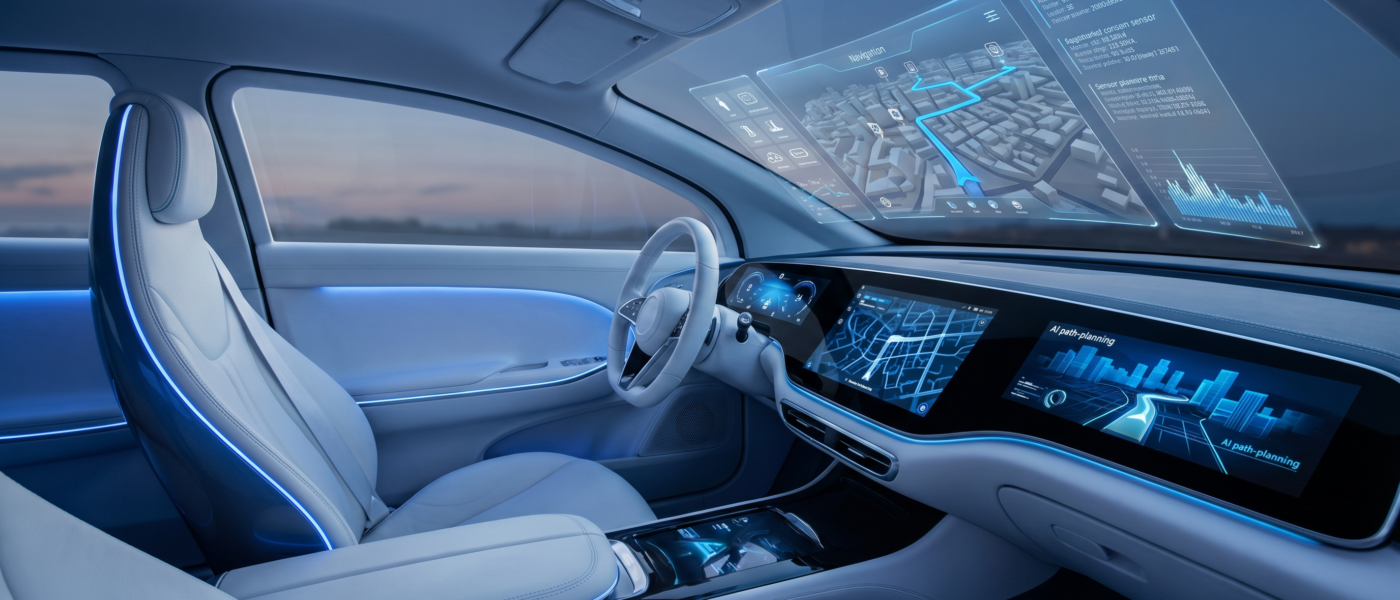
The dream of hands-free travel is no longer a distant vision. As we navigate through the current year, autonomous self-driving cars technology 2025 is rapidly reshaping our daily commutes. These innovations are turning long, stressful drives into productive time for passengers across the United States.
This shift represents a massive evolution in how we interact with our roads. By removing human error from the equation, this self-driving technology promises to make our highways significantly safer for everyone. It is not just about convenience; it is about a fundamental change in our transportation infrastructure.
As we look ahead, the integration of autonomous vehicles into our cities will continue to grow. This article explores how these smart machines are altering driving habits and the automotive industry. Join us as we dive into the future of mobility and what it means for your next trip.
Key Takeaways
- Modern travel is becoming safer through advanced automation.
- Commuting habits are shifting toward increased passenger productivity.
- The automotive industry is undergoing a major structural transformation.
- Human error reduction remains the primary goal of new road systems.
- Smart infrastructure is essential for the widespread adoption of these systems.
The Current State of Autonomous Self-Driving Cars Technology 2025
The current state of autonomous self-driving cars technology as we near 2025 is a testament to the rapid progress in the field. Autonomous vehicles (AVs) have transitioned from being a futuristic concept to a tangible reality, with various levels of autonomy being implemented across different vehicle models.
The Society of Automotive Engineers (SAE) has defined six levels of autonomy, ranging from Level 0 (no automation) to Level 5 (full automation). Understanding these levels is crucial to grasping the current state of autonomous technology.
Defining Levels of Autonomy in Modern Vehicles
Modern vehicles are equipped with a range of autonomy levels, from basic driver assistance systems to more advanced semi-autonomous features. The levels are defined as follows:
- Level 0: No automation; the driver is in complete control.
- Level 1: Driver assistance; vehicles are equipped with features like adaptive cruise control.
- Level 2: Partial automation; vehicles can control steering and acceleration/deceleration, but a driver is still required.
- Level 3: Conditional automation; vehicles can make decisions, but a human driver must be ready to intervene.
- Level 4: High automation; vehicles can operate autonomously in most conditions, but human intervention is still possible.
- Level 5: Full automation; vehicles are fully autonomous and do not require human intervention.
Transitioning from Driver Assistance to Full Automation
The transition from driver assistance to full automation is a gradual process. Currently, most commercially available vehicles fall under Level 2 autonomy, with some premium models approaching Level 3. The shift towards higher levels of autonomy is driven by advancements in sensor technology, artificial intelligence, and machine learning.
For instance, companies like Waymo and Tesla are at the forefront of this transition, with their vehicles equipped with sophisticated driver-assistance systems (ADAS) and autonomous driving capabilities. As technology continues to evolve, we can expect to see more vehicles achieving higher levels of autonomy.
The regulatory environment is also playing a crucial role in this transition. Governments and regulatory bodies are establishing guidelines and standards for the development and deployment of autonomous vehicles. For example, the National Highway Traffic Safety Administration (NHTSA) in the United States has issued guidelines for the safe deployment of AVs.
Key Advancements in Sensor Fusion and LiDAR
The future of autonomous driving is being shaped by key advancements in sensor fusion and LiDAR technology, enabling vehicles to perceive their environment more accurately. As the automotive industry continues to push the boundaries of autonomous technology, the integration of sophisticated sensor systems has become paramount.
Sensor fusion, the process of combining data from various sensors such as cameras, radar, and LiDAR, is critical for creating a comprehensive understanding of a vehicle’s surroundings. LiDAR (Light Detection and Ranging) technology, in particular, has emerged as a cornerstone of autonomous vehicle sensing, providing high-resolution 3D mapping of the environment.
The Evolution of Solid-State LiDAR Systems
Traditional LiDAR systems have been bulky and expensive, limiting their widespread adoption. However, solid-state LiDAR is revolutionizing the field by offering a more compact, reliable, and cost-effective solution. Solid-state LiDAR achieves this through the use of semiconductor technology, eliminating the need for mechanical components.
According to a report by Yole Développement, solid-state LiDAR is expected to become a significant player in the LiDAR market, driven by its advantages in terms of size, cost, and durability. “Solid-state LiDAR is poised to disrupt the automotive LiDAR market, offering a more robust and scalable solution for autonomous vehicles,” notes the report.
Improving Object Detection in Adverse Weather Conditions
One of the significant challenges facing autonomous vehicles is object detection in adverse weather conditions such as fog, rain, or snow. Advanced LiDAR systems, coupled with sophisticated sensor fusion algorithms, are being developed to mitigate these challenges. These systems enhance the vehicle’s ability to detect and respond to its environment, even in challenging weather.
For instance, Waymo’s LiDAR technology has been designed to provide high-resolution imaging even in low-light conditions, significantly improving safety. The use of multiple sensors and advanced fusion techniques allows for more accurate detection and classification of objects, reducing the risk of accidents.
As highlighted by industry experts, “The combination of LiDAR with other sensing technologies is crucial for achieving the high levels of safety and reliability required for autonomous vehicles.” This synergy is key to overcoming the limitations of individual sensing technologies and ensuring robust performance across various environmental conditions.
The Role of Artificial Intelligence in Real-Time Decision Making
As autonomous technology advances, the reliance on artificial intelligence for real-time decision-making has become increasingly paramount. Autonomous vehicles (AVs) rely heavily on AI to interpret sensory data, make informed decisions, and navigate through complex environments safely.
Artificial intelligence is the backbone of autonomous driving, enabling vehicles to understand their surroundings, predict potential hazards, and react accordingly. The integration of AI in AVs involves sophisticated algorithms that process vast amounts of data from various sensors, including cameras, LiDAR, radar, and ultrasonic sensors.
Neural Networks and Predictive Path Planning
Neural networks play a critical role in predictive path planning, a crucial aspect of autonomous driving. By analyzing data from various sources, neural networks can predict the behavior of other road users, such as pedestrians, cars, and bicycles, allowing the AV to plan its path accordingly.
The predictive capabilities of neural networks are enhanced through machine learning, where the system learns from vast datasets to improve its forecasting accuracy. This enables AVs to make proactive decisions, such as adjusting speed or changing lanes to avoid potential hazards.
Key aspects of neural networks in predictive path planning include:
- Pattern recognition in complex driving scenarios
- Predictive modeling of road user behavior
- Continuous learning and adaptation to new scenarios
Edge Computing for Instantaneous Response Times
Edge computing is another vital component that facilitates the real-time decision-making capability of AVs. By processing data closer to the source (i.e., within the vehicle or at the edge of the network), edge computing reduces latency and enables instantaneous responses to changing driving conditions.
This is particularly important in scenarios where milliseconds can make a significant difference in safety outcomes. Edge computing ensures that AVs can react quickly to unexpected events, such as a pedestrian stepping into the road or a vehicle cutting into their path.
The benefits of edge computing in AVs include:
- Reduced latency in data processing
- Improved real-time decision-making capabilities
- Enhanced safety through faster response times
Regulatory Milestones and Safety Standards in the United States
Regulatory frameworks for autonomous vehicles in the U.S. are evolving rapidly, with a focus on balancing innovation with public safety. As the technology advances, regulatory bodies are working to create a comprehensive framework that addresses the unique challenges posed by self-driving vehicles.
National Highway Traffic Safety Administration Guidelines
The National Highway Traffic Safety Administration (NHTSA) plays a crucial role in shaping the regulatory landscape for autonomous vehicles. NHTSA guidelines are designed to ensure that autonomous vehicles operate safely and efficiently. Some key aspects of these guidelines include:
- Performance Standards: Establishing performance standards for autonomous vehicles to ensure they can operate safely in various environments.
- Safety Assessments: Requiring manufacturers to conduct thorough safety assessments before deploying autonomous vehicles on public roads.
- Data Reporting: Mandating the reporting of data related to the performance and safety of autonomous vehicles.
Liability Frameworks for Autonomous Operations
As autonomous vehicles become more prevalent, there is a growing need to establish clear liability frameworks. These frameworks will help determine responsibility in the event of an accident involving an autonomous vehicle. The development of liability frameworks is complex and involves considering various factors, including:
| Factor | Description | Impact on Liability |
|---|---|---|
| Manufacturer Responsibility | The role of the manufacturer in ensuring the vehicle’s safety and performance. | High |
| Software Updates | The responsibility for maintaining and updating the software that controls the autonomous vehicle. | Medium |
| Owner/Operator Responsibility | The role of the vehicle’s owner or operator in ensuring the vehicle is used as intended. | Low |
The establishment of clear liability frameworks is essential for the widespread adoption of autonomous vehicles. It provides clarity and consistency, which are crucial for manufacturers, regulators, and the public.
Major Players Leading the Autonomous Revolution
Waymo, Tesla, and Cruise are leading the charge in the autonomous revolution, transforming the future of transportation. These companies are at the forefront of developing and deploying autonomous technology, each contributing their unique strengths and innovations.
Waymo and the Expansion of Robotaxi Services
Waymo, a subsidiary of Alphabet Inc., has been a pioneer in the autonomous vehicle space. Its robotaxi service has been expanding, providing passengers with a glimpse into the future of transportation. “Waymo’s focus on safety and its extensive testing have positioned it as a leader in the autonomous taxi market.” The company’s use of advanced LiDAR technology and rigorous testing protocols has enabled it to offer a reliable and efficient service.
Waymo’s expansion into new markets is a significant step towards making autonomous vehicles a mainstream reality. As the company continues to grow its fleet and improve its technology, it is likely to play a crucial role in shaping the future of urban mobility.
Tesla Full Self-Driving Capabilities and Data Collection
Tesla has been a major player in the electric vehicle market and is now making significant strides in autonomous technology with its Full Self-Driving (FSD) capability. Tesla’s approach to autonomy is heavily reliant on its vast data collection efforts, gathering insights from its fleet of vehicles on the road. “Tesla’s data-driven approach allows it to refine its FSD software continuously, enhancing its ability to navigate complex driving scenarios.”
The data collected by Tesla is invaluable for improving its autonomous driving algorithms. By leveraging this data, Tesla can update its FSD software over-the-air, ensuring that its vehicles remain at the cutting edge of autonomous technology.
Cruise and the Integration of Urban Autonomous Fleets
Cruise, backed by General Motors, has been making significant progress in integrating autonomous fleets into urban environments. The company’s focus on creating a seamless and efficient autonomous driving experience has led to the development of sophisticated software and hardware solutions. Cruise’s technology is designed to navigate the complexities of urban driving, including construction zones, pedestrians, and unexpected events.
“The future of transportation is not just about the vehicles themselves, but about creating an ecosystem that supports safe, efficient, and accessible mobility for all.”
Cruise’s efforts are a step towards realizing this vision, with its autonomous fleets poised to revolutionize urban mobility.
Infrastructure Requirements for Smart Cities
The future of autonomous driving is inextricably linked with the development of smart city infrastructure. As cities around the world continue to urbanize, the need for efficient, safe, and sustainable transportation systems becomes increasingly critical. Autonomous vehicles (AVs) are set to play a pivotal role in this transformation, but their success hinges on the existence of robust infrastructure that can support their operation.
One of the key components of this infrastructure is the implementation of advanced communication protocols that enable seamless interaction between vehicles and the urban environment. This is where Vehicle-to-Everything (V2X) communication protocols come into play.
Vehicle-to-Everything Communication Protocols
V2X communication is a technology that allows vehicles to communicate with other vehicles, pedestrians, infrastructure, and the cloud. This enables a range of benefits, including improved safety, reduced congestion, and enhanced mobility. For instance, V2X can help prevent accidents by allowing vehicles to share their position, speed, and intentions with other road users.
The implementation of V2X communication protocols requires significant investment in dedicated short-range communication (DSRC) technology or cellular networks such as 5G. Cities must also establish clear standards and regulations to ensure interoperability between different manufacturers and systems.
Smart Traffic Management Systems
Another crucial aspect of smart city infrastructure is the development of smart traffic management systems. These systems utilize real-time data and advanced analytics to optimize traffic flow, reduce congestion, and minimize travel times. By integrating data from various sources, including traffic sensors, cameras, and connected vehicles, cities can create a more responsive and adaptive traffic management system.
Smart traffic management can also be used to prioritize public transportation, pedestrians, and cyclists, creating a more equitable and sustainable urban environment. Furthermore, by optimizing traffic signal timing and lane usage, cities can reduce congestion and lower emissions, contributing to a cleaner and healthier environment.
In conclusion, the successful integration of autonomous vehicles into smart cities requires a multifaceted approach that includes advanced communication protocols and intelligent traffic management systems. By investing in these critical infrastructure components, cities can unlock the full potential of AVs and create a more efficient, safe, and sustainable transportation network.
How Autonomous Vehicles Are Reshaping Urban Mobility
Autonomous vehicles are poised to significantly impact urban mobility, offering a more efficient and sustainable transportation solution. As cities continue to grow and face challenges related to congestion and pollution, the integration of autonomous vehicles into urban transportation systems is becoming increasingly important.
One of the primary ways autonomous vehicles are reshaping urban mobility is through optimized routing. By utilizing real-time data and advanced algorithms, autonomous vehicles can navigate through cities more efficiently, reducing travel times and decreasing the likelihood of congestion.
Reducing Congestion Through Optimized Routing
Optimized routing in autonomous vehicles involves the use of sophisticated navigation systems that can analyze traffic patterns and adjust routes accordingly. This not only reduces congestion but also lowers emissions by minimizing the time vehicles spend on the road.
- Real-time traffic analysis
- Dynamic route adjustment
- Integration with smart traffic management systems
By streamlining traffic flow, autonomous vehicles can significantly reduce congestion in urban areas. This is particularly beneficial in densely populated cities where traffic jams are a common occurrence.
The Shift Toward Mobility-as-a-Service Models
Another significant impact of autonomous vehicles on urban mobility is the shift toward Mobility-as-a-Service (MaaS) models. MaaS integrates public, private, and shared transportation services into a single, convenient platform, making it easier for people to move around cities without relying on personal vehicles.
The benefits of MaaS include:
- Increased mobility for those without access to personal vehicles
- Reduced traffic congestion through more efficient use of transportation resources
- Lower emissions due to decreased reliance on personal vehicles
The Impact on Commercial Logistics and Trucking
Commercial logistics and trucking are on the cusp of a transformation driven by autonomous technology. The integration of autonomous vehicles into the logistics industry is expected to bring about significant improvements in efficiency, safety, and cost reduction.
The advent of autonomous logistics is poised to revolutionize the way goods are transported. With the ability to operate around the clock without the need for driver breaks, autonomous trucks can significantly reduce delivery times and increase overall productivity.
Autonomous Long-Haul Freight Solutions
One of the most promising areas for autonomous technology in logistics is long-haul freight. Autonomous trucks can navigate highways and major routes with ease, reducing the need for human intervention over long distances. Companies like Tesla and Daimler are already testing autonomous long-haul freight solutions, with promising results.
The benefits of autonomous long-haul freight include reduced labor costs, improved safety through the reduction of driver fatigue, and increased fuel efficiency due to optimized driving patterns.
Last-Mile Delivery Innovations
Last-mile delivery is another area where autonomous technology is making significant inroads. Autonomous vehicles, including drones and self-driving vans, are being tested for their ability to navigate complex urban environments and deliver packages directly to customers.
Innovations in last-mile delivery are not limited to the vehicles themselves but also include the development of sophisticated routing algorithms and delivery management systems. These advancements are expected to make last-mile delivery faster, more efficient, and more cost-effective.
The impact of autonomous technology on commercial logistics and trucking will be profound, leading to a more streamlined, efficient, and safe industry. As the technology continues to evolve, we can expect to see widespread adoption across the logistics sector.
Cybersecurity Challenges in Connected Vehicles
The rise of connected vehicles has introduced a new frontier in cybersecurity challenges. As vehicles become more autonomous and reliant on complex software, the potential for cyber threats grows. Ensuring the security of these vehicles is paramount to prevent potentially disastrous outcomes.
Cybersecurity in autonomous vehicles is not just about protecting the vehicle’s systems; it’s also about safeguarding the data collected and transmitted by these vehicles. Remote vehicle hijacking is a significant concern, where hackers could potentially take control of a vehicle, posing serious safety risks to passengers and other road users.
Protecting Against Remote Vehicle Hijacking
To mitigate the risk of remote vehicle hijacking, manufacturers are implementing robust security measures. These include:
- Advanced intrusion detection systems that can identify and respond to potential threats in real-time.
- Secure software updates that can patch vulnerabilities without requiring physical access to the vehicle.
- Network segmentation to isolate critical systems from less secure components.
Moreover, collaboration between manufacturers, cybersecurity experts, and regulatory bodies is crucial. Sharing information about potential threats and best practices can help stay ahead of cybercriminals.
Data Privacy and Encryption Standards
Data privacy is another critical aspect of cybersecurity in connected vehicles. Vehicles collect vast amounts of data, including personal information about drivers and passengers. Ensuring this data is protected is essential.
Encryption standards play a vital role in safeguarding vehicle data. By encrypting data both in transit and at rest, manufacturers can significantly reduce the risk of data breaches. Additionally, strict access controls and regular security audits are necessary to maintain the integrity of vehicle systems.
Some of the key data privacy and encryption measures include:
- Implementing end-to-end encryption for data transmission.
- Using secure authentication mechanisms to ensure only authorized access to vehicle data.
- Conducting regular security assessments to identify and address vulnerabilities.
By prioritizing cybersecurity and data privacy, the automotive industry can build trust with consumers and ensure the safe deployment of autonomous vehicles.
Consumer Adoption and Public Perception
Consumer adoption and public perception are pivotal factors that will determine the future of autonomous vehicles on our roads. As the technology continues to evolve, understanding the dynamics that influence how the public views and accepts self-driving cars is crucial.
The journey to widespread adoption is not just about overcoming technological hurdles but also about addressing the concerns and skepticism of potential users. One of the primary concerns revolves around safety.
Building Trust Through Transparent Safety Data
Transparent safety data is fundamental in building trust among consumers. By making safety records and testing data publicly available, manufacturers can demonstrate the reliability and safety of their autonomous systems. For instance, companies like Waymo have been proactive in sharing their safety reports, which helps in fostering a sense of security among potential users.
Moreover, transparency about the limitations of current autonomous technology can also help manage consumer expectations and build a more realistic understanding of what self-driving cars can achieve.
Addressing the Psychological Barrier to Hands-Free Driving
Another significant barrier to the adoption of autonomous vehicles is the psychological discomfort associated with relinquishing control to a machine. Many drivers feel a loss of control or are anxious about the vehicle’s ability to handle unexpected situations.
To address this, manufacturers are not only working on improving the technology but also on educating the public about how autonomous vehicles work. For example, Tesla has been at the forefront of providing detailed explanations of their Autopilot and Full Self-Driving (FSD) capabilities, helping to demystify the technology for their customers.
Furthermore, gradual exposure to semi-autonomous features in vehicles can help drivers become more comfortable with the idea of hands-free driving. As consumers become more accustomed to advanced driver-assistance systems (ADAS), the transition to fully autonomous vehicles is likely to become smoother.
Environmental Benefits and Energy Efficiency
One of the most compelling benefits of autonomous vehicles lies in their potential to enhance energy efficiency and reduce emissions. As the world shifts towards more sustainable transportation solutions, the role of autonomous technology in achieving these goals becomes increasingly significant.
Autonomous vehicles can optimize driving patterns to minimize fuel consumption and lower emissions. By smoothing the acceleration and braking processes, autonomous vehicles can reduce the energy wasted in traditional driving patterns. This optimization can lead to significant environmental benefits, particularly in urban areas where traffic congestion is a major contributor to emissions.
Optimizing Driving Patterns to Reduce Emissions
Autonomous vehicles can analyze real-time traffic data to optimize routes and reduce congestion, thereby decreasing emissions. Studies have shown that by avoiding stop-and-go traffic and maintaining optimal speeds, autonomous vehicles can achieve a significant reduction in emissions.
For instance, a study by the National Renewable Energy Laboratory found that widespread adoption of autonomous vehicles could reduce energy consumption by up to 10% through optimized driving alone.
| Driving Pattern | Energy Consumption | Emissions Reduction |
|---|---|---|
| Traditional Driving | 100% | 0% |
| Autonomous Optimized | 90% | 10% |
| Autonomous with Eco-Routing | 85% | 15% |
Synergy Between Electric Powertrains and Autonomous Systems
The integration of electric powertrains with autonomous systems further enhances energy efficiency. Electric vehicles (EVs) are inherently more efficient than their internal combustion engine counterparts, and when paired with autonomous technology, they offer a powerful synergy that can significantly reduce environmental impact.
Electric powertrains provide instant torque and are more efficient in converting electrical energy to motion. Autonomous systems can optimize the performance of EVs by smoothing acceleration and regenerative braking, thereby maximizing their efficiency.
For example, Tesla’s Autopilot system, when combined with its electric powertrain, demonstrates how autonomous technology can enhance the efficiency of EVs. By optimizing energy use and reducing waste, such systems set a precedent for future developments in autonomous and electric vehicle technology.
Conclusion
As we approach 2025, the future of autonomous vehicles is becoming increasingly clear. Autonomous technology advancements are transforming the way we drive, with significant progress made in sensor fusion, LiDAR, artificial intelligence, and edge computing. Major players like Waymo, Tesla, and Cruise are leading the charge, pushing the boundaries of what is possible with autonomous self-driving cars.
The impact of autonomous vehicles will be far-reaching, from reshaping urban mobility and reducing congestion to revolutionizing commercial logistics and enhancing energy efficiency. However, challenges such as cybersecurity threats and consumer adoption remain to be addressed.
Despite these challenges, the potential benefits of autonomous technology are undeniable. With continued innovation and investment, autonomous vehicles are poised to revolutionize the way we drive, making our roads safer, our cities more livable, and our transportation systems more efficient. As autonomous technology continues to advance, we can expect to see significant improvements in the future of autonomous vehicles.